
E-Waste Disposal in Los Angeles: Local Rules and Recycling Resources
Reading time: 12 minutes
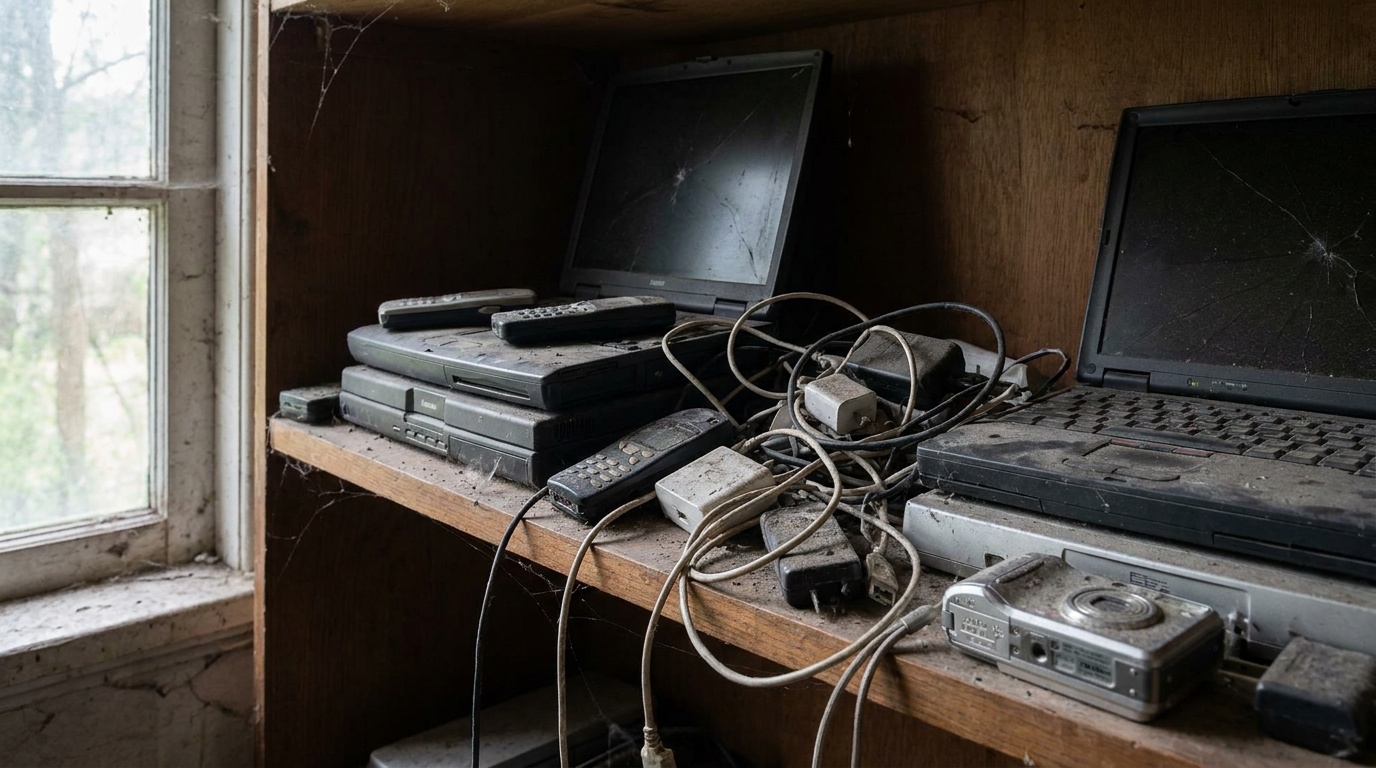
Your old laptop is sitting in a drawer. Your cracked smartphone from two upgrades ago is collecting dust on a shelf. Sound familiar? If you live in Los Angeles, you’re part of one of the most tech-saturated cities in the world — and that means you’re also sitting on a growing pile of electronic waste that, if mishandled, can silently poison your community’s soil, water, and air.
Here’s the straight talk: E-waste isn’t just an environmental buzzword. In 2026, Los Angeles generates an estimated 150,000+ tons of electronic waste annually, making it one of the top e-waste-producing metro areas in the United States. Yet a significant portion of that waste still ends up in landfills — illegally — because residents simply don’t know what to do with it.
This guide is your practical roadmap for navigating LA’s e-waste disposal rules, finding the right drop-off locations, understanding your legal obligations, and making responsible choices that protect both your neighborhood and the planet.
Table of Contents
- Why E-Waste Matters More Than Ever in 2026
- California’s E-Waste Laws: What You’re Required to Do
- Los Angeles-Specific Rules and Regulations
- Where to Recycle E-Waste in LA: Your Best Options
- E-Waste by Device Type: A Visual Breakdown
- Recycling Options Compared
- Common Challenges and How to Overcome Them
- Real-World Examples from LA Residents
- Frequently Asked Questions
- Your E-Waste Action Plan: Clear Next Steps
Why E-Waste Matters More Than Ever in 2026
The global e-waste crisis has accelerated sharply in the mid-2020s. According to the Global E-Waste Monitor 2025, the world generated approximately 62 million metric tons of e-waste in 2024, a number projected to climb another 8% by the end of 2026. California alone — driven by Silicon Valley, Los Angeles, and San Diego’s massive tech ecosystems — contributes disproportionately to that figure.
What makes e-waste particularly dangerous is what’s inside your devices. A single smartphone contains trace amounts of lead, mercury, cadmium, arsenic, and flame retardants. When these materials leach into landfills, they contaminate groundwater supplies and affect low-income communities that are statistically more likely to live near illegal dumping sites — a documented environmental justice issue that the LA County Board of Supervisors formally acknowledged in its 2025 Environmental Equity Report.
But there’s an upside worth noting: e-waste also contains valuable recoverable materials — gold, silver, copper, and rare earth elements. Properly recycling electronics doesn’t just prevent harm; it actively recovers resources worth billions of dollars annually.
The LA Tech Upgrade Cycle Problem
Los Angeles has a particularly acute version of this problem. With a large concentration of entertainment professionals, tech workers, and early adopters, device upgrade cycles in LA run shorter than the national average. A 2025 survey by the Southern California Recycling Alliance found that LA residents replace their smartphones every 2.1 years on average, compared to the national average of 2.8 years. That means more discarded devices, more often, in a concentrated urban area.
Add in business-to-consumer device turnover from Hollywood production companies, gaming studios, and the booming creator economy, and you begin to understand the scale of the challenge LA faces every single year.
California’s E-Waste Laws: What You’re Required to Do
California has some of the most progressive e-waste legislation in the country, and understanding the legal framework is the foundation of responsible disposal.
The California Electronic Waste Recycling Act
The cornerstone of California’s e-waste regulation is the Electronic Waste Recycling Act (SB 20/SB 50), originally passed in 2003 and significantly updated several times since. As of 2026, this law governs the disposal and recycling of covered electronic devices (CEDs), which include:
- Televisions (CRT, LCD, plasma, and OLED)
- Desktop and laptop computers
- Computer monitors
- Tablets and e-readers
- Portable DVD players with screens
Under this law, consumers pay a California Electronic Waste Recycling Fee at the point of purchase, which funds the state’s recycling infrastructure. In 2026, this fee ranges from $4 to $8 depending on screen size, and it entitles you to free drop-off recycling at any authorized collector.
It is illegal under California law to dispose of covered electronic devices in the regular trash or curbside recycling bins. Violations can result in fines of up to $25,000 per day for businesses, and civil penalties for individuals. While individual enforcement is rare, the legal exposure is real — especially for landlords disposing of tenant-left electronics or small business owners clearing out old equipment.
The 2024 update to California’s Proposition 65 also strengthened disclosure requirements for e-waste recyclers themselves, meaning that facilities handling hazardous materials in e-waste must now provide clearer community notifications — a win for LA neighborhoods near recycling facilities.
SB 1047’s Extended Producer Responsibility Ripple Effects
California’s broader Extended Producer Responsibility (EPR) legislation has increasingly pressured electronics manufacturers to design for recyclability. As of 2026, major brands including Apple, Samsung, and Dell are required under updated EPR guidelines to offer take-back programs and report on recycling rates — giving LA consumers even more manufacturer-direct options than existed just two years ago.
Los Angeles-Specific Rules and Regulations
Beyond state law, Los Angeles has layered on its own municipal regulations and enforcement priorities. Understanding these local rules can save you from headaches — and potential fines.
The LA Sanitation and Environment (LASAN) department oversees e-waste disposal within the city. Their 2025–2026 Zero Waste LA Franchise System, which restructured commercial waste collection across the city, explicitly classifies electronic waste as a special waste stream that cannot be commingled with standard recyclables or trash, even for commercial generators.
Key local rules include:
- No curbside e-waste: Electronic devices may not be placed in curbside recycling or trash bins under any circumstances in the City of Los Angeles.
- Bulky item pickup limitations: While LASAN offers bulky item pickup for large items, electronic devices require pre-scheduling and are subject to availability. As of 2026, residents can schedule bulky item e-waste pickup online through MyLA311.
- Business compliance: Businesses generating e-waste must contract with a certified e-waste hauler or use an authorized collection facility. The Zero Waste LA Franchise System requires documentation of proper disposal.
- Data security requirement awareness: While not a disposal law per se, LASAN actively advises that data must be wiped before recycling — a liability issue separate from environmental law but practically important.
LA County (covering unincorporated areas and municipalities outside the City of LA) operates under slightly different logistics but the same core state prohibitions. The LA County Department of Public Works maintains its own network of household hazardous waste (HHW) collection events that include e-waste.
Where to Recycle E-Waste in LA: Your Best Options
Good news: Los Angeles has one of the most robust e-waste collection infrastructures in the country. Here’s a practical breakdown of your best options in 2026.
Option 1: LA County Household Hazardous Waste (HHW) Collection Events
The LA County Department of Public Works operates permanent HHW facilities and mobile collection events throughout the county. These accept a wide range of e-waste at no charge to residents. In 2026, permanent facilities are located at:
- Antelope Valley: 1200 W. Avenue G, Lancaster
- Central LA: 2701 S. Alameda Street, Los Angeles
- East LA: 4600 S. Garfield Ave, Commerce
- South Bay: 1942 E. 223rd Street, Carson
- San Gabriel Valley: 11798 Clark Street, Arcadia
Mobile collection events rotate through different neighborhoods — you can find the current 2026 schedule at LACounty.gov/HHW. These events are free, no-appointment drop-offs that accept televisions, computers, printers, batteries, and more.
Option 2: Manufacturer Take-Back Programs
Thanks to California’s EPR updates, manufacturer take-back programs have expanded significantly. As of 2026:
- Apple: Accepts all Apple devices at any Apple Store in LA. The GiveBack program offers trade-in credits even for devices in poor condition.
- Samsung: Drop-off bins at select Best Buy locations across LA and mail-in options via Samsung’s 2025-expanded Galaxy Upcycling program.
- Dell: Free mail-in recycling for any Dell product, plus drop-off at authorized service centers.
- Best Buy: Accepts up to three items per household per day from most major electronics brands, with a modest fee for televisions over 32 inches.
Option 3: Certified E-Waste Recyclers in LA
Several California-certified e-waste recyclers operate in the Greater LA area and offer convenient drop-off or even pickup services:
- eRecycle LA — Operates collection events in partnership with LASAN and offers business pickup services.
- Green Century Recycling — Located in Van Nuys; accepts a broad range of devices including small appliances with electronic components.
- WeRecycle America — Offers free residential drop-off in Chatsworth with certified data destruction documentation.
Always verify that a recycler holds California Department of Toxic Substances Control (DTSC) certification before dropping off devices. Uncertified “recyclers” sometimes export e-waste to developing countries — the exact outcome you’re trying to avoid.
E-Waste by Device Type: LA Annual Volume (2025 Estimates)
The following chart illustrates the relative volume of different device types in LA’s annual e-waste stream, based on 2025 data from the Southern California Recycling Alliance.
LA E-Waste Volume by Device Type (% of Total Stream)
Source: Southern California Recycling Alliance, 2025 Annual Report
Recycling Options Compared
Not all disposal options are created equal. Use this comparison to choose the method that best fits your situation.
| Option | Cost | Devices Accepted | Data Security | Best For |
|---|---|---|---|---|
| LA County HHW Events | Free | Broad (TVs, computers, batteries) | Basic | Residents with multiple items |
| Manufacturer Take-Back | Free (credit possible) | Brand-specific | High (factory reset) | Single-brand upgrades |
| Best Buy Drop-Off | Free–$30 (TVs) | Most consumer electronics | Moderate | Convenience-focused users |
| Certified LA Recycler | Free–fee for pickup | Very broad incl. appliances | High (cert. destruction available) | Businesses & large volumes |
| LASAN Bulky Item Pickup | Free (residents) | Limited, scheduling required | Basic | Mobility-limited residents |
Common Challenges and How to Overcome Them
Challenge 1: “I Don’t Know If My Device Qualifies”
This is the most common point of confusion. Residents often aren’t sure whether a device is a “covered electronic device” under California law or whether it requires special handling. The practical answer: when in doubt, treat it as e-waste. If it has a circuit board, battery, or screen, it almost certainly shouldn’t go in the regular trash.
Items that surprise people: wireless earbuds, smart home hubs, old Blu-ray players, GPS units, digital cameras, and gaming consoles are all e-waste. Many LA residents don’t realize that the CED fee program doesn’t cover every electronic device — but that doesn’t mean those items are safe to landfill. Certified recyclers and HHW events typically accept them regardless.
Pro Tip: Take a photo of your device and use the LA County “What Do I Do With…?” tool on the LASAN website. In 2026, this tool has been updated with AI-assisted identification for over 2,000 item types.
Challenge 2: Data Security Anxiety
Many LA residents hold onto old devices for years — not because they don’t care about the environment, but because they’re afraid of their personal data ending up in the wrong hands. This is a legitimate concern, but it has practical solutions.
Before recycling any device:
- Smartphones: Perform a full factory reset through settings. For iPhones, use “Erase All Content and Settings.” For Android, use “Factory Reset” and enable encryption first.
- Computers: Use DBAN (Darik’s Boot and Nuke) or the built-in secure erase function in Windows 11 or macOS to overwrite the drive multiple times.
- For business devices with sensitive data: Use a certified recycler that provides a Certificate of Data Destruction — several LA facilities offer this for a modest fee.
Challenge 3: Mobility and Transportation Barriers
Not everyone in LA can easily load a heavy old television into a car and drive to a collection site. This is an equity issue the city has been working to address. Current solutions in 2026 include:
- The expanded LASAN Bulky Item Pickup program, now bookable via the MyLA311 app with 48-hour scheduling windows
- Neighborhood pickup partnerships through certified recyclers like eRecycle LA, who offer subsidized pickup in underserved communities through a LASAN contract
- Several community organizations in South LA, East LA, and the San Fernando Valley run periodic collection drives — check local neighborhood councils for schedules
Real-World Examples from LA Residents
Case Study 1: Maria, Silver Lake Creative Freelancer
Maria upgraded her entire home studio setup in early 2025 — new monitors, a new MacBook Pro, and a new iPad. She had a pile of four old devices and didn’t know where to start. She used the Apple GiveBack program for her old MacBook and iPad, receiving a $180 combined trade-in credit applied to her new purchases. For her two old LCD monitors (non-Apple), she drove to the Carson HHW facility on a Saturday morning, dropped them off in under 10 minutes with no appointment, and paid nothing. Total time invested: about 90 minutes across two trips. Total cost: zero. Data wipe: completed via macOS factory reset before drop-off.
Case Study 2: Rafael, Small Business Owner in East LA
Rafael runs a small accounting firm and needed to retire 12 desktop computers as part of a 2025 office upgrade. Because he handles client financial data, data security was his primary concern. He contracted with WeRecycle America in Chatsworth, who sent a truck to his office, picked up all 12 units, performed certified hard drive shredding on-site, and provided a Certificate of Data Destruction for each unit. Total cost: $240 for the pickup and certification service — which he notes was far cheaper than the potential liability of a data breach. He’s now on a recurring annual contract for future equipment retirement cycles.
Frequently Asked Questions
Is it really illegal to put old electronics in my curbside recycling bin in Los Angeles?
Yes, absolutely. Under California’s Electronic Waste Recycling Act and Los Angeles municipal waste regulations, placing covered electronic devices — including televisions, computers, monitors, and tablets — in curbside recycling or trash bins is illegal. The prohibition applies to both residents and businesses. While individual enforcement against homeowners is uncommon, businesses face serious fines, and the environmental consequences of improper disposal are real regardless of enforcement. The good news is that free alternatives are widely available across LA County, making compliance genuinely easy.
What happens to my old electronics after I drop them off at a recycling facility?
At a certified California recycler, your devices go through a multi-stage process: initial sorting and inventory, manual disassembly to separate components, shredding or granulation of materials, and then sorting of recovered materials — metals, plastics, and glass — for reprocessing. Hazardous materials like lead, mercury, and lithium are segregated for specialized handling. Certified facilities are audited by the California DTSC to ensure compliance. Recovered metals including gold, silver, copper, and palladium re-enter the manufacturing supply chain. Reputable facilities will provide documentation of the recycling chain upon request — a useful practice for businesses with compliance reporting obligations.
Can I get paid for dropping off my old electronics in LA?
In some cases, yes. California’s CEC (Consumer Electronics Recycling) program pays authorized collectors for each pound of certified covered electronic devices they process, but this payment typically goes to the facility, not directly to consumers dropping off devices. However, several options can put money back in your pocket. Manufacturer take-back programs like Apple GiveBack or Samsung Trade-In offer credits for working devices. Third-party platforms like Decluttr, Swappa, or local Facebook Marketplace groups allow you to sell functional older devices directly. For business-volume recycling of high-value devices, some certified recyclers will offer payment per unit for working laptops and smartphones. For most residential drop-offs of older, non-functional devices, expect the service to be free rather than paid.
Your E-Waste Action Plan: Clear Next Steps
You now have a comprehensive map of the e-waste landscape in Los Angeles. Here’s how to translate that knowledge into immediate action.
Your 5-Step E-Waste Action Plan:
- Do a device audit this week. Walk through your home or office and identify every piece of electronics that’s no longer in active use. Be thorough — check drawers, closets, and storage boxes. You may be surprised what you find.
- Categorize by condition. Sort items into: (a) still functional — consider trade-in or donation; (b) broken but repairable — explore local repair cafes; (c) end-of-life — route to certified recycling.
- Wipe your data before anything else. Before a device leaves your possession for any reason, perform a factory reset or certified data wipe. This step is non-negotiable and takes 15 minutes.
- Choose your disposal pathway. Use the comparison table in this article to match your specific situation — residential convenience, business compliance, data security priority, or zero cost — to the right option.
- Schedule it and do it. Book a LASAN bulky item pickup, check the next HHW mobile event in your neighborhood, or locate your nearest certified drop-off facility. Put it on your calendar as a concrete appointment.
Here’s a broader truth worth holding onto: as LA pushes toward its Zero Waste 2030 goals, individual e-waste decisions aggregate into city-wide outcomes. The choices you make about your old smartphone or monitor are a small but genuine contribution to whether Los Angeles leads or lags on electronic waste as a national environmental issue.
So here’s a question worth sitting with: If every one of the 4 million households in Los Angeles properly recycled just one forgotten device this year, what kind of city would that make LA — and what does that say about the cumulative power of small, informed decisions made at scale?
Article reviewed by Nina Svensson, Interior Architecture & Color Design Consultant, on May 4, 2026