
Donating vs. Selling vs. Disposing: Sorting Your Stuff Efficiently
Reading time: 14 minutes
Here’s a scenario most of us know well: you open a closet door, stare into the abyss of accumulated possessions, and immediately close it again. Maybe it’s a garage packed with tools you haven’t touched in years, a spare room that became a storage unit, or a kitchen stuffed with gadgets that still wear their original price tags. Whatever the situation, the question is always the same — what do I actually do with all this stuff?
The answer isn’t as simple as “donate everything” or “just throw it out.” Sorting your belongings efficiently requires a strategic framework — one that balances financial return, environmental responsibility, personal convenience, and community impact. In 2026, with secondhand markets booming, sustainability pressures intensifying, and digital platforms making resale easier than ever, the choices you make about your possessions matter more than they used to.
This guide cuts through the overwhelm. We’ll walk you through exactly how to decide what gets donated, sold, or disposed of — with specific tools, timelines, and real-world examples to make every decision feel manageable.
Table of Contents
- Why Your Sorting Strategy Matters in 2026
- The Decision Framework: How to Categorize Anything
- Donating: Giving Your Items a Second Life
- Selling: Turning Clutter into Cash
- Disposing: When Letting Go Is the Only Option
- Side-by-Side Comparison
- Where Does Your Stuff Actually End Up?
- Common Challenges and How to Overcome Them
- Frequently Asked Questions
- Your Decluttering Roadmap: From Chaos to Clarity
Why Your Sorting Strategy Matters in 2026
The global secondhand market reached an estimated $230 billion in 2025, according to ThredUp’s annual resale report, and projections suggest it will surpass $275 billion by 2027. Meanwhile, landfill capacity continues to shrink in major urban centers across North America, Europe, and Asia. In 2026, municipal solid waste management costs are hitting record highs, with cities like Los Angeles and London spending over $1,200 per ton to process residential waste.
On the flip side, charitable donation centers — from Goodwill to local food banks accepting household goods — are navigating their own quality crises. In 2025, Goodwill Industries reported that approximately 25% of donated items were too damaged or inappropriate to resell, costing organizations millions in disposal fees annually. This means your good intentions can actually become someone else’s problem if you’re not thoughtful about what you donate.
The bottom line? Sorting your stuff efficiently isn’t just a personal organization win — it’s an economic, environmental, and ethical decision with real downstream consequences.
“The most sustainable item is the one that already exists. But only if it finds its way into the right hands, not the landfill.” — Ellen MacArthur Foundation, Circular Economy Report 2025
The Decision Framework: How to Categorize Anything
Before diving into the specifics of donating, selling, or disposing, you need a reliable decision-making system. Think of it as a triage process — the same clarity doctors use in emergency rooms to prioritize who gets what care, applied to your belongings.
The Four Core Questions
When you pick up any item, run it through these four questions in sequence:
- Is it functional? Does it work as intended, without requiring significant repair?
- Does someone else need it? Could another person or organization genuinely benefit from having this item?
- Does it have resale value? Would someone pay a meaningful amount for it — enough to justify your time listing it?
- Can it be recycled or responsibly disposed of? If it can’t be donated or sold, is there a more responsible exit path than a general landfill?
Your answers guide you directly to the right category. An item that is functional, needed, and has resale value above roughly $20 is almost always worth listing for sale. A functional item with limited resale value is a strong donation candidate. An item that is broken and non-recyclable goes in the disposal pile. Simple on paper — but let’s make it even more practical.
The “One-Touch” Rule for Faster Sorting
Professional organizers increasingly advocate the one-touch rule: when you pick up an item during a sort, make a decision right then and do not put it back without placing it in a designated pile. Research from the National Association of Productivity and Organizing Professionals (NAPO) shows that people who re-handle items during decluttering sessions take 40% longer to complete the process and are more likely to keep things they originally intended to remove.
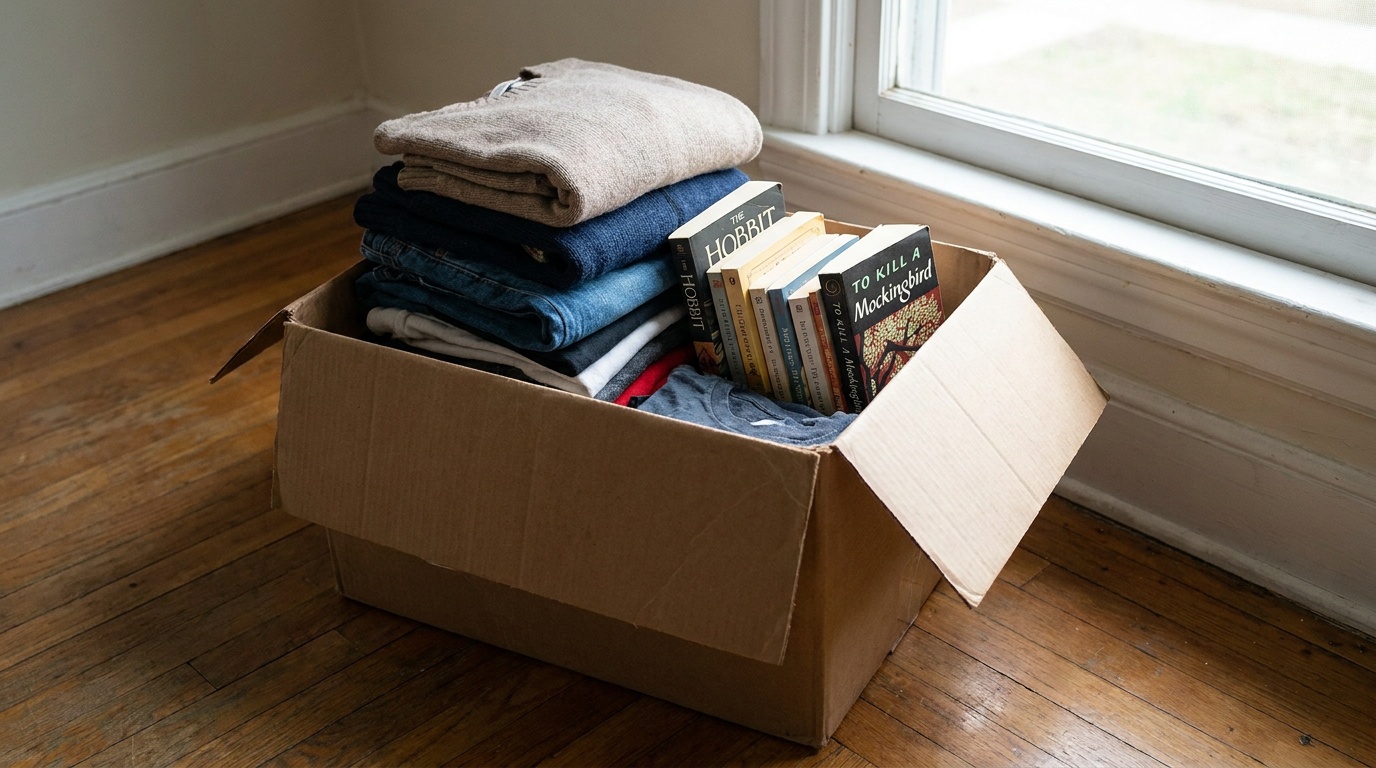
Set up three physical zones before you start — a donate box, a sell pile, and a disposal bag. Then move through each area of your home systematically, touching each item exactly once. This isn’t just efficient; it also reduces the emotional fatigue that causes most decluttering sessions to stall.
Donating: Giving Your Items a Second Life
Donating is the emotionally rewarding option — the one that lets you picture a child playing with your old toys, a family furnishing their first apartment with your spare furniture, or a job-seeker interviewing in a suit from your closet. But to make your donation genuinely impactful, you need to be strategic about where and what you donate.
What Actually Gets Accepted (and What Doesn’t)
Most thrift stores and charitable organizations have strict quality standards. As a general rule, items should be:
- Clean — washed, wiped down, or otherwise presentable
- Functional — all parts present, no missing components
- Safe — free of recalls (check recalls.gov for the latest 2026 recall database)
- Complete — furniture without major structural damage, electronics that power on
Items consistently rejected by most donation centers include: mattresses (due to hygiene and bedbug liability), car seats (safety expiration concerns), large broken appliances, and anything with significant mold or pest damage.
Finding the Right Donation Match
Not all donation centers are created equal. Specialized organizations often have the most impact:
- Books: Little Free Libraries, local schools, prison book programs
- Professional clothing: Dress for Success, Career Gear
- Furniture: Habitat for Humanity ReStores, local shelters
- Electronics: PCs for People, World Computer Exchange
- Sporting goods: SportsGift, local youth leagues
- Unused cosmetics/toiletries: Beauty Bus Foundation, local women’s shelters
Case Study — The Miller Family, Portland 2025: After downsizing from a 4-bedroom house to a 2-bedroom condo, the Miller family had over 300 items to sort. By using an app called Donation Town to match items to local nonprofits, they arranged free pickup for furniture, kitchen items, and children’s toys — all going to a local refugee resettlement organization. The family received a total donation receipt of approximately $4,200 in fair market value, which they deducted on their 2025 federal taxes. The process took one weekend and cost them nothing.
Selling: Turning Clutter into Cash
Selling is the option that excites most people — the idea of transforming old possessions into real money. And in 2026, the tools available to do this have never been more powerful. But selling also requires the most effort, so the key is knowing when the return on your time actually makes sense.
Platform Selection: Matching Your Items to the Right Marketplace
The platform you choose can make or break your selling success. In 2026, the major marketplaces each have distinct strengths:
- eBay: Best for collectibles, electronics, and niche items with a national or global buyer base. Average seller earns $180–$220/month according to eBay’s 2025 Seller Economic Impact Report.
- Facebook Marketplace: Best for large furniture, appliances, and local pickups. Zero listing fees remain its biggest advantage in 2026.
- Poshmark / Depop: Ideal for clothing, shoes, and accessories, particularly fashion-forward or branded pieces. Depop’s Gen Z user base grew 22% in 2025.
- Mercari: A solid middle-ground platform for household items, toys, and miscellaneous goods. Introduced AI-powered pricing suggestions in late 2025.
- Craigslist: Still effective for bulk lots, local equipment, and items that don’t photograph well.
- Whatnot / TikTok Shop Live: Emerging powerful options for selling collectibles, vintage, and curated lots via live-stream commerce — a major trend in 2026.
Pricing Strategies That Actually Work
The most common selling mistake is mispricing — either so high that nothing sells, or so low that you leave money on the table. Here’s a practical approach:
- Research sold listings, not active listings. On eBay, filter by “Sold Items” to see what buyers actually paid, not what sellers wishfully listed.
- Apply the 30% Rule: Most used items in good condition sell for 25–35% of their original retail price. Items in like-new condition with original packaging can reach 50–60%.
- Bundle strategically: Grouping similar low-value items (e.g., a set of five kitchen gadgets) often yields better total returns than listing each piece separately.
- Use AI pricing tools: Platforms like Mercari and new standalone apps like PriceMyStuff (launched Q1 2026) use image recognition to suggest market-rate pricing instantly.
Case Study — Marcus T., a freelance designer in Austin: In early 2026, Marcus sorted through a home studio overhaul. He identified 18 items with resale potential — monitors, camera equipment, software licenses, and ergonomic accessories. By spending two Saturday afternoons photographing and listing on eBay and Reverb (for audio gear), he generated $2,340 in total sales over six weeks. His hourly return worked out to approximately $58/hour — well above minimum wage and worth every minute.
Disposing: When Letting Go Is the Only Option
Sometimes an item is simply at the end of its useful life. It can’t be donated, it won’t sell, and holding onto it serves no purpose. This is where responsible disposal becomes critically important — because “throwing it away” is rarely as simple as it sounds.
Categories Requiring Special Disposal
A surprising number of everyday items cannot legally or safely go into standard household trash:
- Electronics (e-waste): Computers, phones, TVs, and batteries contain lead, mercury, and cadmium. In 2026, all 50 U.S. states have some form of e-waste legislation. Use manufacturers’ take-back programs or find a certified e-Steward recycler via e-stewards.org.
- Hazardous household materials: Paint, pesticides, solvents, and cleaning chemicals require hazardous waste drop-off events. Most municipalities host these quarterly.
- Medications: Never flush medications. Use DEA-authorized collection sites — over 12,000 nationwide as of 2026 — or use FDA-approved mail-back envelopes.
- Appliances with refrigerants: Old refrigerators and air conditioners contain CFCs and require certified technician handling before disposal.
- Textiles: Even damaged clothing doesn’t have to go to landfill. H&M, Patagonia, and dozens of other retailers now offer textile recycling programs globally.
Junk Removal Services: When to Use Them
For large-scale cleanouts — estates, major renovations, hoarding situations — professional junk removal is often the most practical route. Companies like 1-800-GOT-JUNK and local alternatives typically charge $150–$600 per truckload in 2026. The better services sort for donation and recycling before landfilling, diverting up to 60% of collected materials from the waste stream. Always ask about their diversion rate before booking.
Side-by-Side Comparison
| Factor | Donating | Selling | Disposing |
|---|---|---|---|
| Financial Return | Tax deduction only | Direct cash income | Possible cost (fees) |
| Time Investment | Low–Medium | High | Low |
| Environmental Impact | Very Positive | Positive | Negative–Neutral |
| Community Impact | High | Medium | Low |
| Best For | Functional items <$20 value | Items >$20, good condition | Broken, expired, or hazardous |
Where Does Your Stuff Actually End Up?
Here’s a sobering look at the destination breakdown of household items in the United States in 2025, based on EPA and secondary market research data. This visualization shows what percentage of household goods typically end up in each category when people declutter without a clear strategy:
Household Item Destination During Typical Decluttering (2025 Data)
Source: EPA Waste Characterization Study 2025 / ThredUp Resale Report 2025
That 62% going to landfill represents an enormous missed opportunity. With a clear sorting strategy, most declutterers could realistically flip those numbers — getting 40–50% of items into donation or resale channels, and reserving landfill only for truly unrecoverable waste.
Common Challenges and How to Overcome Them
Challenge 1: Emotional Attachment Making Every Decision Feel Hard
The biggest barrier to effective decluttering isn’t logistics — it’s emotion. We attach meaning to objects: the bread maker from a deceased parent, the university sweatshirt from a decade ago, the children’s artwork stacked three inches thick. These attachments are real and valid. But they can paralyze the entire sorting process.
Practical solution: Use the “legacy box” strategy. Give yourself permission to keep one medium-sized box of purely sentimental items without justification. Everything else goes through the decision framework. This containment strategy gives emotion a legitimate outlet without letting it dominate the whole process. For children’s artwork specifically, apps like Artkive digitize physical pieces into a professional book — preserving memories without the physical pile.
Challenge 2: The “What If I Need It Later” Paralysis
This is the cognitive trap that keeps garages full of “just in case” items for years. The statistic that helps most people: according to professional organizers, 80% of items people fear they might need “later” are never actually needed. And if they are, replacement cost is usually manageable.
Practical solution: Apply a 6-month reverse trial. Box up the uncertain items, seal the box with a date label, and put it in storage. If you don’t open the box to retrieve anything within six months, donate or sell it without opening it again. The act of needing something will compel you to open the box — the act of not needing it will prove your hesitation wrong.
Challenge 3: The Selling Black Hole (Listing Items That Never Sell)
Many people start with great intentions to sell, post listings on three platforms, and then watch items sit unsold for months. The pile grows, motivation drops, and eventually everything goes in the trash anyway.
Practical solution: Set a 30-day sell-by date. If an item hasn’t sold within 30 days at your asking price, drop the price by 20% for one week. If it still hasn’t sold, either donate it immediately or try a different platform. Don’t let perfect be the enemy of gone. A $15 donation receipt is better than a $25 item that sits in your spare room for eight months.
Frequently Asked Questions
Can I claim a tax deduction for donated items in 2026?
Yes — in the United States, donations of goods to qualified 501(c)(3) organizations are deductible at fair market value, provided you itemize deductions on your federal return. For donations totaling over $500, you’ll need to complete IRS Form 8283. For individual items valued over $5,000 (such as antique furniture or art), a qualified appraisal is required. The IRS’s Publication 561, updated for 2026, provides current fair market value guidelines for common household goods. Always get a written acknowledgment receipt from the receiving organization at the time of donation.
What’s the minimum value threshold that makes selling worth the effort?
The general consensus among professional resellers and organizers in 2026 is a minimum of $15–$20 per item as a selling threshold — factoring in your time to photograph, list, package, and ship. Below that, donation typically makes more practical sense. However, bundling changes the math: five items worth $5 each can become a $25 bundle that’s worth listing. Also consider platform-specific dynamics — a $10 item on a local Facebook Marketplace requires almost no shipping time, making it more viable than the same item sold nationally on eBay.
How do I dispose of electronics safely without paying a fee?
Several no-cost options exist for responsible e-waste disposal in 2026. Major retailers including Best Buy, Staples, and Apple offer free in-store drop-off for most consumer electronics regardless of where they were purchased. Manufacturer take-back programs (Dell Reconnect, HP Planet Partners, Samsung Recycling Direct) are widely available and free. Call2Recycle handles battery disposal at over 34,000 locations across North America at no charge. For large quantities, municipalities typically offer free quarterly e-waste collection events — check your city or county website for 2026 schedules. Avoid simply placing electronics in curbside recycling bins, as most standard recycling facilities aren’t equipped to process them safely.
Your Decluttering Roadmap: From Chaos to Clarity
You’ve got the framework. You’ve got the platforms. You’ve got the insight. Now it’s time to turn knowledge into action. Here’s your practical implementation roadmap:
- Schedule your sorting sessions (Week 1). Block two to three 2-hour sessions on your calendar. Treat them like appointments. Set up your three zones — donate, sell, dispose — before you begin. Download one resale app and one donation locator app (Donation Town or Charity Navigator’s tool work well in 2026).
- Do a quick-sort sweep first (Week 1–2). Move through every space with a box and bag, pulling out obvious candidates for each category. Don’t deliberate yet — just separate the clear cases from the uncertain ones. The uncertain pile gets its own box labeled “decide later.”
- Process your “decide later” pile with fresh eyes (Week 2). Revisit uncertain items with the four core questions. Use the 6-month box strategy for anything still unresolved. For every item you’re keeping, ask: Where will this live, and will I actually use it?
- List your highest-value sell items this week (Week 3). Aim for your top 10 items by estimated value. Photograph in natural light, research sold comps, and price competitively. Set your 30-day sell-by date rule from the start.
- Arrange donations and responsible disposal in one coordinated push (Week 3–4). Schedule a donation pickup, book a junk removal service if needed, and locate your nearest e-waste and hazardous materials drop-off sites. Do it all in one organized push rather than piecemeal.
Key Takeaways:
- Donate items that are functional but have low resale value — match them to specialized organizations for maximum impact
- Sell items worth $20+ using the right platform for each category, and set firm sell-by deadlines
- Dispose responsibly — most “trash” items have better exit options than landfill if you know where to look
- Emotional attachment is the real obstacle; use structured strategies to work with it, not against it
- In 2026, tools, platforms, and programs exist to make every category of sorting easier than ever before
As the circular economy continues to reshape how we relate to ownership, the habit of sorting thoughtfully — rather than discarding reflexively — becomes a genuine life skill, not just a weekend project. Every well-sorted declutter is a small vote for a more resourceful, less wasteful world.
Here’s the question worth sitting with: When you look around your space today, what’s the one area holding the most untapped potential — whether that’s hidden cash in your closet, impact waiting in your donation box, or simply the mental clarity that comes from a room that finally breathes? Start there. The rest will follow.
Article reviewed by Nina Svensson, Interior Architecture & Color Design Consultant, on May 4, 2026